
There is a significant change to Student visa requirements that you should be aware of if you plan to study in the UK in late 2026 or later.
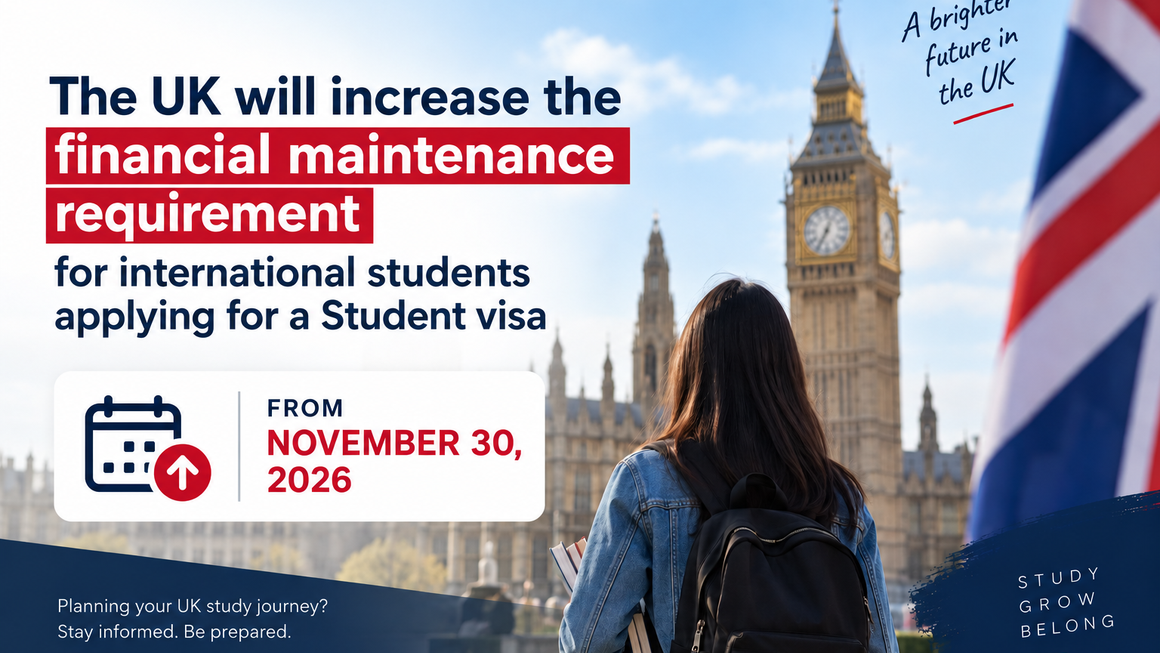
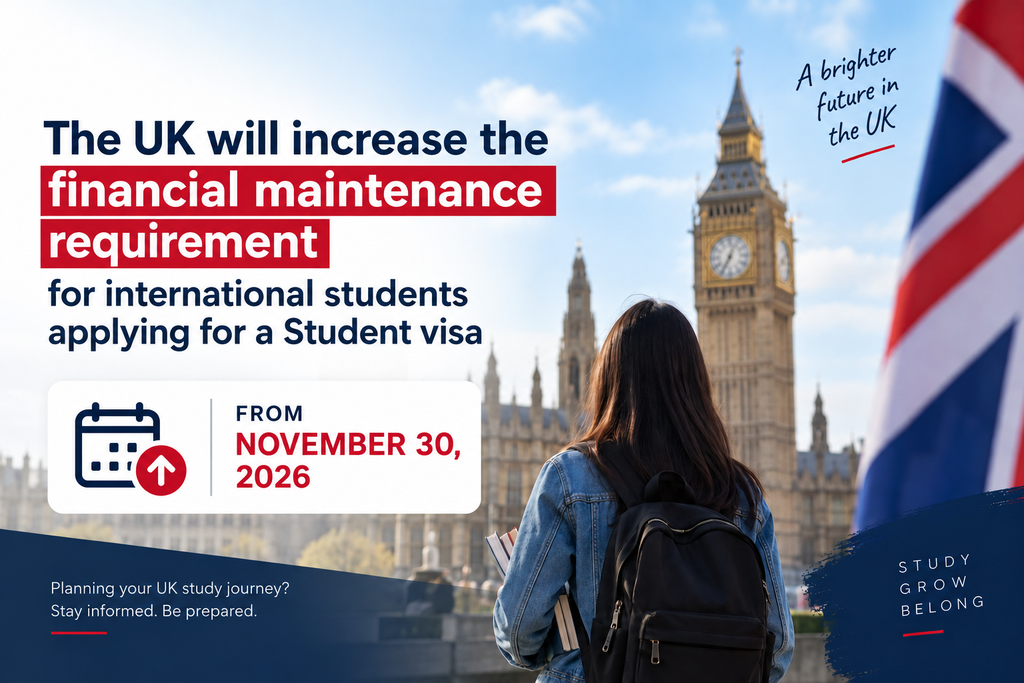
The UK will increase the financial maintenance requirement for international students from 30 November 2026.
The new monthly requirement for students studying in London will be £1,570, with a maximum of £14,130 for nine months. For students studying outside London, the requirement will be £1,203 per month, with a maximum of £10,827 for nine months.
However, parents and students should understand one important point:
£14,130 is not a new visa charge.
It is the amount of living-cost funds that eligible students may need to demonstrate when applying for their visa.
What is changing?
From 30 November 2026:
London: £1,570 per month — maximum £14,130 for nine months
Outside London: £1,203 per month — maximum £10,827 for nine months
Compared with the current requirements, this represents an increase of £41 per month in London and £32 per month outside London.
Over nine months, the maximum increase is £369 in London and £288 outside London.
The updated figures apply to Student visa applications submitted on or after 30 November 2026.
What does this mean financially?
The maintenance requirement is not the same as your complete UK education budget.
Students still need to consider tuition fees, accommodation, transportation, food, visa-related costs, the Immigration Health Charge, travel expenses and other costs associated with relocating to the UK.
In other words, having the required maintenance funds does not mean every expense you will face in the UK has been covered.
As a student counsellor, one of the most common mistakes I see is students thinking about their financial requirements only after receiving a university offer.
Financial planning should begin alongside your university planning.
Does the money need to be in your bank account?
There are specific rules regarding financial evidence.
Where students are required to demonstrate funds, the money will generally need to have been held for the required period, normally 28 consecutive days, subject to applicable rules and exemptions.
There are also provisions relating to tuition fees already paid and certain qualifying accommodation payments.
This is why students should not leave their financial documentation until the last minute.
The source of the funds, when they were held and the supporting documentation can all be important.
Should you choose a university outside London?
Some students may consider studying outside London because of the lower maintenance requirement.
However, your university choice should never be based solely on visa maintenance requirements.
London provides access to a wide range of industries, businesses and professional networks. Universities outside London can also offer excellent academic programmers, career opportunities and potentially different living-cost structures.
Your course, university, career goals, accommodation and overall financial situation should all be considered before making a decision.
Should you apply before 30 November 2026?
If your study plans and application timeline allow you to apply before the new requirement takes effect, it is important to understand how your application date affects the financial requirement.
However, don’t choose an unsuitable university or course simply to avoid the increase.
The maximum difference over nine months is £369 in London and £288 outside London. Your education and career decisions can affect you for years, so they deserve more consideration than a relatively small change in the maintenance requirement.
What should students in Sri Lanka do now?
If you are planning to study in the UK, start preparing early.
- Calculate your complete budget.
Consider tuition, accommodation, living expenses, travel and visa-related costs. - Prepare your financial evidence early.
Don’t wait until your CAS or visa appointment. - Choose your study location carefully.
Consider the university, course, career opportunities and overall cost. - Don’t depend entirely on part-time work.
Make sure you have sufficient funds before travelling. - Seek professional guidance.
Your course, university, study location, tuition payments and financial circumstances can affect how you prepare your application.
Final Thoughts
The November 2026 increase is not something to panic about. It is something to prepare for.
The new maximum maintenance requirement will be £14,130 for students studying in London and £10,827 for students studying outside London.
These amounts are living-cost funds for visa purposes, not an additional visa fee or tuition charge.
If you are planning to study in the UK, don’t make your decision based on headlines alone.
Choose your course carefully. Choose your university wisely. Understand the total cost. Prepare your finances early. And make sure your visa strategy reflects your individual circumstances.
Being well-prepared can make the difference between a stressful visa application and a confident one.